
San Juan County Criminal Court Cases
San Juan County criminal court cases are divided by charge and stage. Felonies belong in the Eleventh Judicial District Court. Its Aztec location is the felony courthouse in the county seat, while a second District Court site serves Farmington. State misdemeanors, DWI matters, traffic cases, and felony preliminary proceedings go through the Aztec or Farmington Magistrate Court. Municipal courts keep petty misdemeanors, traffic, DWI, and city ordinance matters filed under local authority. They do not conduct jury trials.
The judicial clerk, not the elected County Clerk, is custodian of each court file. One person may have records at more than one San Juan County courthouse because an early felony proceeding can begin in Magistrate Court before later District Court filings. A city matter may remain with a municipal clerk. Search results should therefore be matched by case number, location, filing date, and status rather than by name alone.
San Juan County Court Map
The local court map prevents many failed requests. The Eleventh Judicial District Court operates at 103 South Oliver Drive, Aztec, and 851 Andrea Drive, Farmington. Both counters publish weekday hours from 8:00 a.m. to 5:00 p.m. The Aztec court can be reached at 505-334-6151; Farmington uses 505-326-2256. Those clerks handle felony filings and requests for official copies.
Aztec Magistrate Court is at 200 Gossett Drive and uses 505-334-9479. Farmington Magistrate Court is at 950 West Apache Street and uses 505-326-4338. The municipal clerk that issued a city case remains the right source for that local file. The New Mexico court finder can help confirm jurisdiction before a trip or call. Court staff can also arrange language access. Library Justice Stations may host an approved remote appearance, but library staff cannot interpret a docket or answer case questions.
Searching San Juan County Case Records
The best first pass is New Mexico Case Lookup. It is free and does not require an account. The public index covers appellate, district, magistrate, metropolitan, and limited municipal information. It does not supply the official court file or document images. Use the result to find the correct San Juan County court and a stable case number, then contact that clerk for the record needed.
- Select the court location and open Case Search.
- Search by party name or known case number, then check close name matches with care.
- Narrow results by open or closed status and filed-date range.
- Record the case number, court, filing date, status, and useful docket entries.
- Ask the correct clerk about inspection, ordinary copies, or certified copies.
The interface has several controls that help separate similar results. A San Juan County criminal number may include a District Court location code, the letters CR, a year, and a sequence. The judiciary's own expungement examples use the pattern D-202-CR-2023-0000, though the actual location segment varies.
| Field Label | Type | Required | Notes |
|---|---|---|---|
| Select a location | Dropdown | Yes to enter search | Choose the court or location |
| First, middle, last name | Text | Search dependent | Middle name can narrow a result |
| Case Status | Dropdown | No | All, Open, or Closed |
| Filed On or After | Date | No | Limits the start of the range |
| Filed On or Before | Date | No | Limits the end of the range |
| Sort By | Dropdown | No | Filed Date, reverse date, or status |
The official Case Lookup screen shows how location selection comes before the name and date controls.
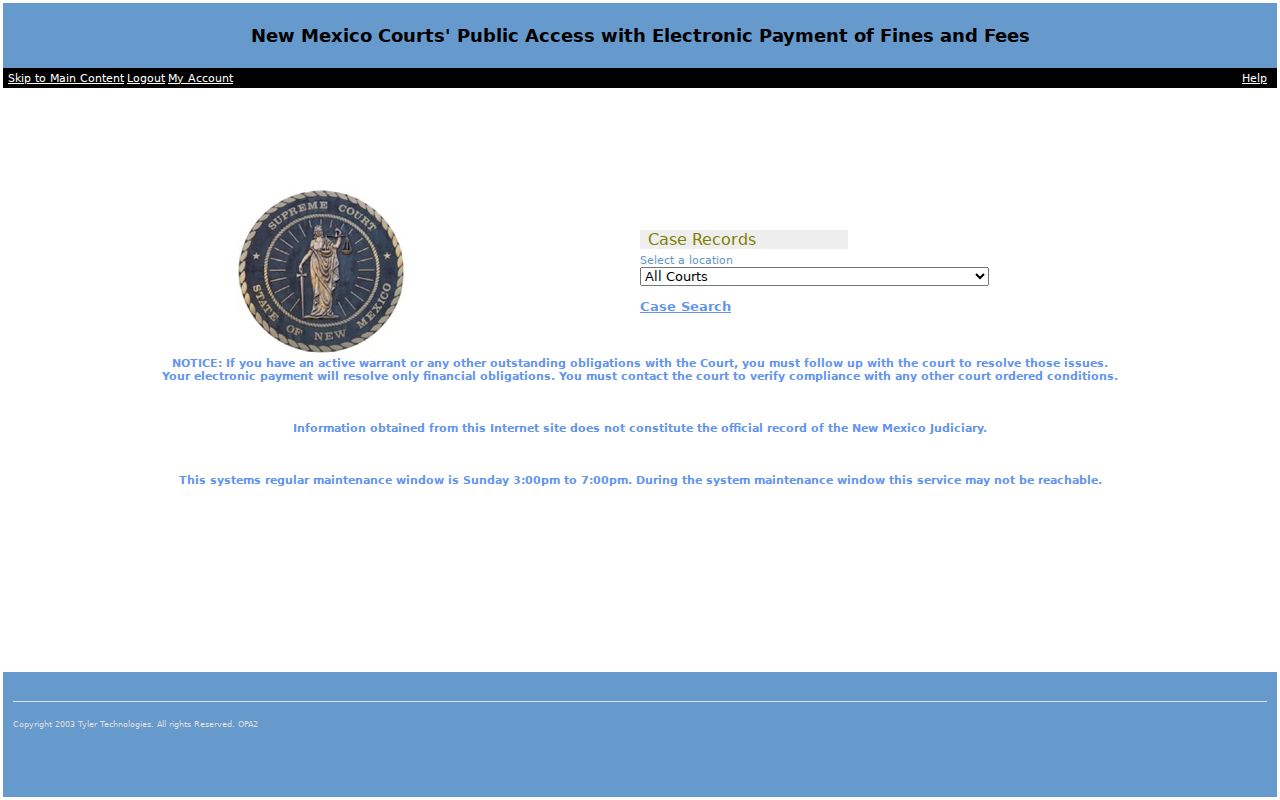
That layout makes the court choice part of the search, so a second location check can be worthwhile when the first query misses a known San Juan County case.
San Juan Court Lookup Limits
Case Lookup is an index, not a document library. General results omit pleadings, orders, and other document images. They also suppress personal identifiers such as Social Security numbers and addresses. Juvenile criminal cases have been hidden from public search since July 1, 2007. Family Violence Protection Act order cases have been hidden since July 1, 2008. Limited municipal data reaches only historic criminal domestic-violence and DWI convictions beginning September 1, 1991.
Routine maintenance runs Sunday from 3:00 to 7:00 p.m. A blank result during that window may be a service issue, not proof that no record exists. Online payment also addresses only a financial obligation. The court warns that payment does not clear an active warrant or other condition. Call the clerk named in the docket before treating any payment as full compliance.
Note: A missing public result can reflect court coverage, timing, protection, expungement, or the wrong location rather than no case.
Inside a San Juan County Case File
A San Juan County case file records what prosecutors filed and what the court did. The charging document may be a complaint, information, or indictment. A complaint is an initial sworn allegation. An information is filed by a prosecutor, while an indictment comes from a grand jury. Later entries can show arraignment, the plea, motions, hearings, orders, disposition, judgment, sentence, and financial terms.
| Case Number and Court | Identifies the judicial file, location, case type, year, and sequence. |
|---|---|
| Charging Document | States the allegations formally filed with the court. |
| Docket Entries | Chronological notices, motions, hearings, orders, and other court events. |
| Parties and Counsel | Public index entries for parties and attorneys where disclosure is allowed. |
| Disposition and Judgment | Shows dismissal, acquittal, plea, conviction, or another resolved outcome. |
| Sentence and Conditions | Records custody, probation, fines, restitution, treatment, or other ordered terms. |
A disposition is the outcome of a charge. Dismissal ends the charge without a conviction, and acquittal means a not-guilty result. The booking charge is not a substitute for either finding. It may be changed, declined, or dismissed after arrest. Readers tracing an arrest into the final case can use the fuller San Juan County arrest lookup for the separate custody layer, then return to the court file for the filed charge and outcome.
San Juan County Court re:SearchNM Access
Readers who need electronic documents can evaluate re:SearchNM. It requires registration, and access depends on the user's approved profile. Tier 1 includes most criminal cases, but registered access is not a promise that every record or document will be visible. A self-represented party must register and submit the proper access application. Support is available at support@nmcourts.gov.
The judiciary's public access and re:SearchNM explanation compares the general, registered, and secured tiers.
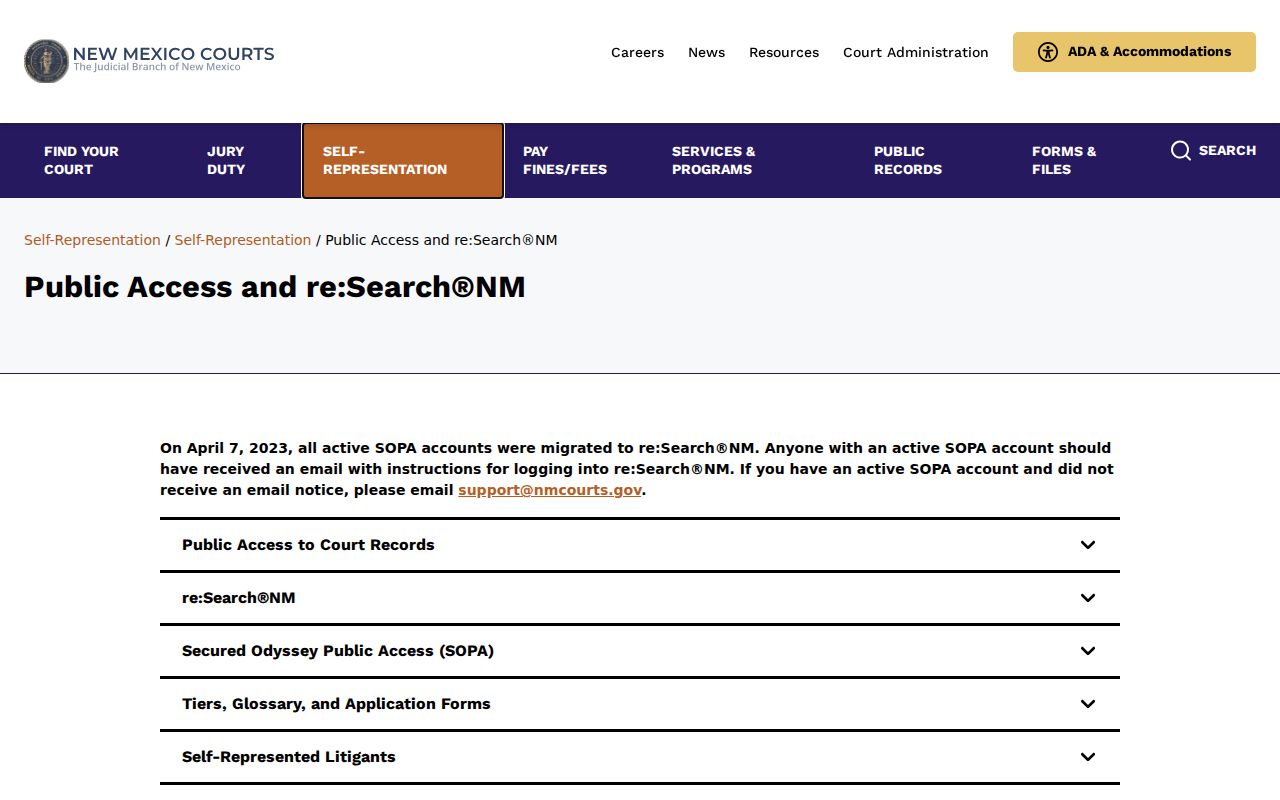
The tier model explains why two users can see different material for the same San Juan County docket without either screen being the official complete file.
San Juan County Registered Court Login
The registered re:SearchNM interface is a separate entry from the free public index.
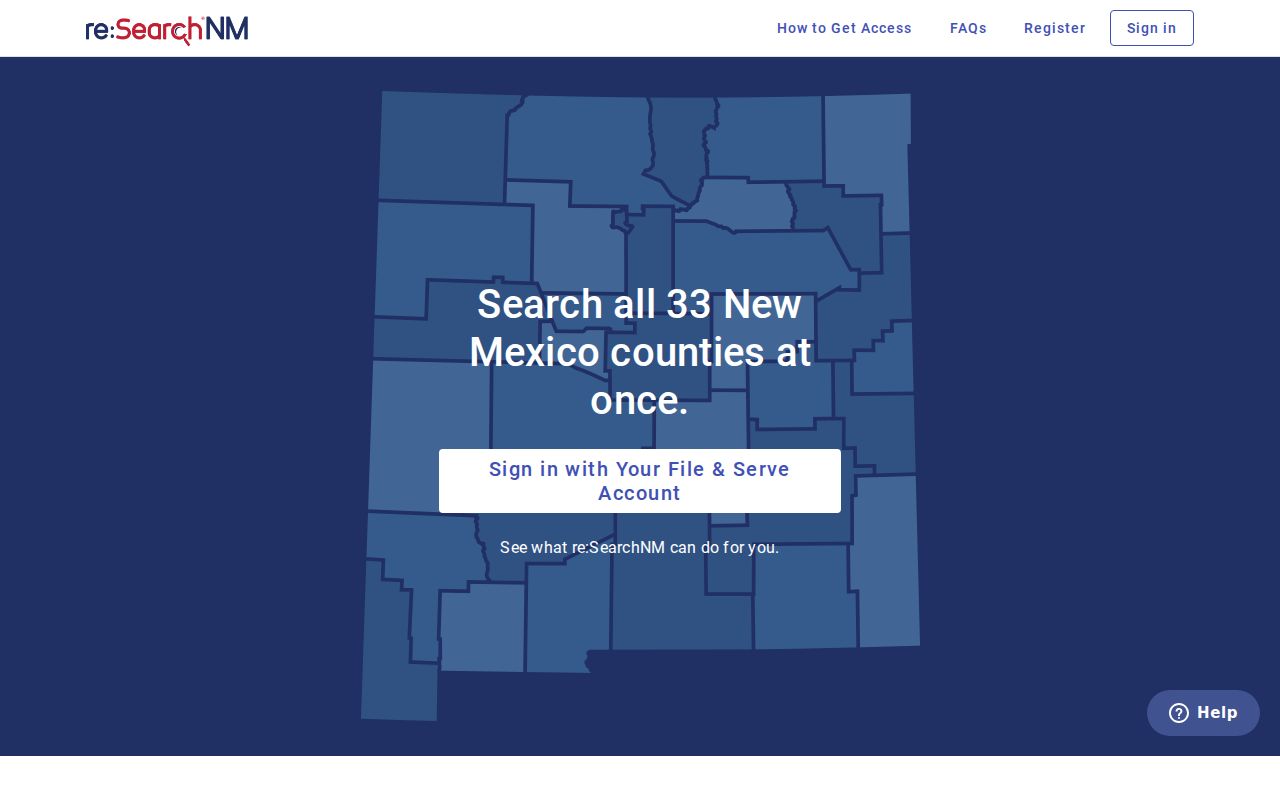
Use that sign-in path for profile-based online document access, while directing official-copy and certification questions to the San Juan County court clerk.
How a Criminal Case Moves
Once a charge is filed, the court creates the judicial path. Arraignment is the appearance at which the accused hears the charge and enters a plea. Pretrial work can include disclosure of evidence, motions, scheduling, negotiations, and release conditions. A case may resolve by plea, dismissal, or trial. If guilt is established, judgment and sentencing follow. Appeals or later motions may add new docket events.
Case flow: Charges Filed → Arraignment → Pretrial → Plea or Trial → Disposition → Sentencing
San Juan Pretrial Services may create release and supervision events before final disposition. After sentence, a docket can show probation or a commitment to the New Mexico Corrections Department. The court record can remain open or visible after release from the Adult Detention Center because custody and prosecution have separate timelines.
The Sheriff's Civil, Court Services, and Transport Division provides court security and moves people for proceedings or into state custody. That work helps explain why the person and the court file may be at different San Juan County locations.
San Juan County DWI Court
The 2026 New Mexico treatment-court directory lists a San Juan County Magistrate Court DWI Court in Farmington. Judge Erich Cole presides, and Britney Garrison is the coordinator. The directory gives 505-326-2256 and aztdblg@nmcourts.gov as contacts. This named program can produce treatment, review, compliance, and supervision events that look different from a simple sequence of plea and sentence.
Program participation should be read in context. A docket condition is not a new arrest, nor does it by itself state the final result of every charge. Compare the condition with later disposition and judgment entries. San Juan County also has Pretrial Services, which is distinct from post-judgment probation and from county Alternative Sentencing.
Older San Juan County Case Files
For records before 1997, use the New Mexico Judiciary IPRA portal or contact the correct clerk. Describe the party, approximate dates, likely court, case type, and any known case number with reasonable detail. A request for an old felony file belongs with District Court. A state misdemeanor file may instead be at Magistrate Court, while a city ordinance matter can remain with a municipal clerk.
Do not send a judicial request to the county's JustFOIA portal. That portal serves county-held material such as releasable sheriff reports and is not a court-record ordering system. The Eleventh District's certified-copy fee was not located in the official sources reviewed, so ask the clerk for the current charge and method before ordering. Older files may also require staff retrieval rather than instant web access.
Case Record Access & Restrictions
New Mexico's Supreme Court Case Access Policy sets general public, registered, and secured access tiers. The New Mexico Inspection of Public Records Act, NMSA 1978 §§14-2-1 through 14-2-12, supplies a process for eligible records requests, but it does not override sealed files or protected judicial categories. Juvenile matters, protected-order cases, personal identifiers, and expunged records may be hidden or redacted.
The Criminal Record Expungement Act, NMSA 1978 §§29-3A-1 through 29-3A-9, can remove covered arrest and court entries from general public access after an order. A sealed San Juan County criminal court case may therefore be absent from an ordinary name search. That absence should not be treated as a factual statement about whether an event once occurred.
The court, clerk, and repository serve different roles. New Mexico Case Lookup indexes proceedings. The judicial clerk maintains the file. NMDPS compiles fingerprint-supported arrest cycles and reported outcomes, with completeness tied to contributing agencies. Keeping those roles apart is the soundest way to read San Juan County court records.